
Category: American history
New book from Eric Metaxas shares the American Revolution’s forgotten Christian roots
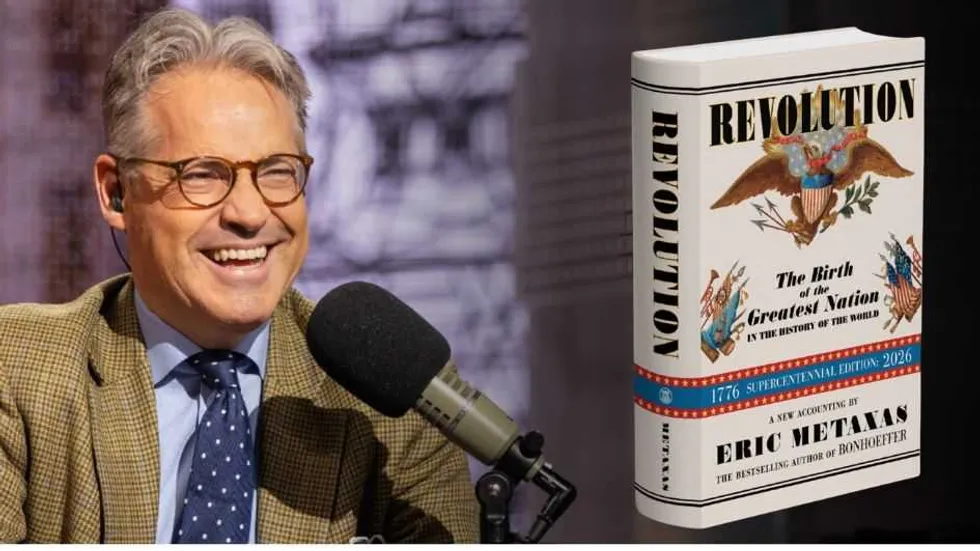
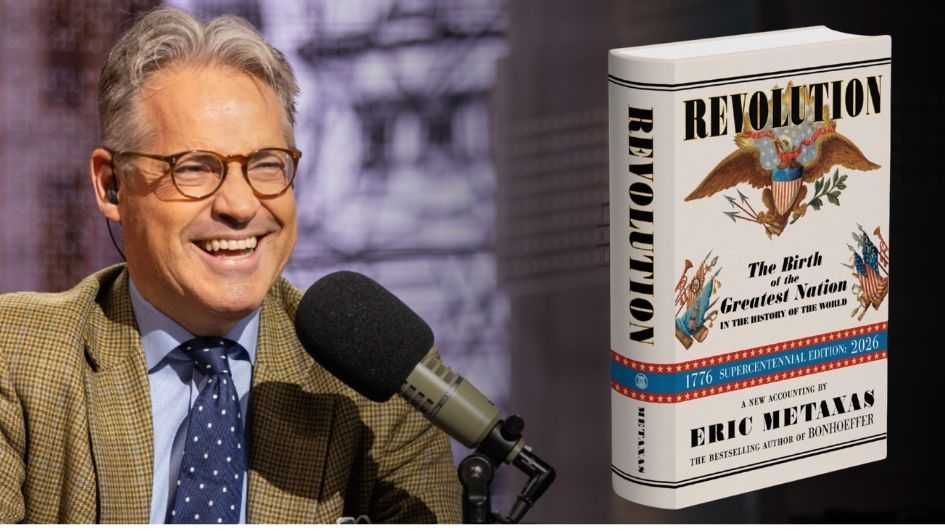
Since first garnering national attention with his 2011 biography “Bonhoeffer: Pastor, Martyr, Prophet, Spy,” author, radio host, and cultural commentator Eric Metaxas has become one of the most prominent Christian public intellectuals in American conservative life. A best-selling author whose books include “Martin Luther,” “If You Can Keep It,” and “Letter to the American Church,” Metaxas is now about to release “Revolution: The Birth of the Greatest Nation in the History of the World.” Weeks ahead of publication, he sat down with John Zmirak to discuss the American founding, the spiritual roots of the Revolution, and the modern crisis of civic memory.
John Zmirak: For the past 10 years or so, you and I have had a tradition: You write a deeply serious book on a very important topic, and I ask you impertinent, frivolous questions about it, which you answer with exasperated reluctance. Since “Revolution” is the biggest book you’ve published in some years, I thought we should do the same thing, but perhaps at greater length, if only to test the reader’s patience. Are you agreeable?
‘Perhaps the central idea is that apart from Christian faith, there would never have come into existence the nation called the United States of America.’
Eric Metaxas: More than agreeable! Fire away, sir!
John Zmirak: As you were writing the book, you were worried about the length. You forced yourself to leave out some offbeat, outrageous incidents and spurn some avenues of inquiry. First, can you tell us what you wish you had had room to cover? Second, did you consider other means of shortening the book — for instance, by leaving out all the verbs? I find that in most books, they just clutter things up. In many academic books published recently, authors largely eschew them, albeit to the detriment of readability …
Eric Metaxas: Yes, I wanted this to be a definite and comprehensive telling of the epic tale of America’s birth 250 years ago. So there’s a lot in it! Every famous story and every amazing hero and a few despicable villains. But for the record, I did not leave out any of the offbeat and outrageous incidents, simply because I couldn’t help myself and because they’re so wildly entertaining. For example, I had to include the scene at the Hellfire Club in which the maniacal, cross-eyed John Wilkes contrives to have a garishly costumed baboon leap onto the back of his archnemesis John Montague, the earl of Sandwich. Such scenes seem to me central to the wider story, somehow, because they give it the color we need to understand the period.
I hope people enjoy my chapter on the “Mischianza” celebration in Philadelphia, for example. Nor could I refrain from mentioning the “gastric lusts” of the stout and haughty imbecile that was General James Grant. And of course on the first page of the first chapter, I mention Sir Thomas Crapper in a footnote. I really do think including some of the stranger and more interesting details makes the book more fun to read, generally. That’s the hope!
But I genuinely wish I could have gone on for another 200 pages. Perhaps in a second edition I will do that. Depending on how the current edition is received, of course. But there really are so many stories I wanted to include but simply didn’t have room for. I was dying to include the story of the burning of my hometown, Danbury, Connecticut, by the monstrous British General Tryon, in which Benedict Arnold figures prominently, several years before his name literally became synonymous with traitor. Perhaps in the second edition, as I say.
’50-year drift’
John Zmirak: You’re publishing this book to mark the 250th anniversary of America’s founding, which pedants refer to as the “Septuagesima” or something. But you prevailed upon President Trump to start calling it by your own pet name, the “Supercentennial,” which is at once both less confusing and sillier. My first question: Given your close access to President Trump, do you think you could start feeding him my policy ideas? For instance, I want him to start a RICO investigation of the U.S. Catholic bishops for smuggling immigrants into the country and getting $5 billion in federal contracts over 15 years as their reward. Could you make that happen?
Second question: How would you compare the state of the country with its condition during the Bicentennial, which, given our ages, each of us remembers as a time of widespread patriotism, economic crisis, and acne? Are American elites promoting national pride, gratitude, and civic literacy the way they once did through the “Bicentennial Minutes” that used to show between episodes of “Felix the Cat” and “Huckleberry Hound”? Or are our elites doing something else entirely? And if so, why?
Eric Metaxas: I hesitate to point out that these are not really questions per se, but will overlook that detail and try to “answer” them. I also hesitate to point out that your numerals are a Potemkin village, only there to hide the fact that a host of actual questions lurk behind the papier-mâché numbers. But I will try to answer at least some of your many wonderful questions!
Yes, of course, I certainly can importune the president with any policy proposals you want to get in front of him, especially the brilliant one about the Catholic bishops! Consider it done. Or maybe I can just give you Susie Wiles’ private email address and you can pitch her on these ideas yourself. I’ll do that privately, of course, since Susie has asked me never to give out her personal email to people of your particular “ilk,” and when she said that, she mentioned you specifically and made a ghastly face.
Regarding the differences between the Bicentennial — which we both remember — and the Supercentennial we are currently experiencing, I think that yes, more Americans knew more about American history in 1976 than today, but I also think that the 50-year drift away from teaching American history and the subsequent drift away from our founding ideals has caused more Americans to wake up and become more patriotic than ever. The madness of what we’ve been through as a nation has caused many to realize we desperately need to know our history, which is precisely why I wrote the book. Let’s just say Ken Burns’ PBS homage to the Native Americans disguised as a series on the American Revolution doesn’t exactly help things, and I thought someone should step up.
‘A grand pair of tusks’
John Zmirak: As I mentioned when we talked about “Revolution” on your radio show, this is the first book that convinced me that the patriots were right, that the British abuses of colonists’ rights met the exacting criteria for just war, and that the American founders were actually the conservatives resisting a new ideology imposed by godless, arrogant elites. In that sense, the Boston Tea Party was a forerunner of the election integrity protests on January 6, 2021. Were there issues on which your research for this book made you change your mind? What did you learn that most surprised you?
Eric Metaxas: The most surprising thing I learned was that George Washington made many of his own dentures and at one point — on a lathe operated with a foot pedal in the basement at Mount Vernon — he fashioned for himself a grand pair of tusks that he thought “properly fitting to the august office of the nation’s chief executive,” which were of such size as “inspired the deepest reverence” in those in his company and which he more than once used to intimidate Jefferson and Hamilton into silence. Most biographies leave such tidbits out of the story, but I simply refuse to!
Unfortunately, the Smithsonian has the tusks hidden away in storage in an annex in Maryland. It is my belief that their absence from the actual exhibit in the museum on our national mall marks a monumental ellipsis in the great story of Washington’s presidency. Of course I might be making this up, but who will ever know? You’ll just have to read the book, I suppose.
‘Decadence of British elites’
John Zmirak: How aggressively secular had British elites become by 1763, when the conflict with the colonies began? How fervently Christian had Americans become in the meantime, under the influence of Second Great Awakening preachers such as George Whitefield? Would you compare the growing schism between the two groups to the divide in America today between post-Christian elites and institutions and the scrappy, Bible-reading subculture of serious believers? Was there a real threat, as many colonists saw, of the British authorities interfering with religious freedom in America — as we’ve just learned the Biden administration was doing, thanks to the Trump administration’s report on anti-Christian bias?
Eric Metaxas: Can we be serious for a moment? Honestly, I had zero idea of any of this when I began my research, but this contrast became very clear almost immediately. It really is shocking that this is not more widely known, and I sincerely hope my book will help people see that this yawning cultural divide was at the heart of the matter. The British elites were as mocking of the simple evangelical culture of the colonies — especially in Massachusetts — as the secular elites are today. I simply had never known this. And yes, the threat the colonists saw was very real. Just as it was under the Biden administration.
John Zmirak: While we might find founders such as John Adams or Samuel Adams more admirable — more suitable candidates for roles such as “civic leader” or “son-in-law” — on the British side, we encounter Falstaffian wonders such as Lord Charles Townshend, aka “Champagne Charley,” who arguably did more to alienate the colonies than any other single man. Can you please tell us about “Champagne Charley” and his infamous speech in Parliament? Candidly, tell us with whom you’d rather have dinner: Sam Adams or “Champagne Charley”?
Eric Metaxas: This is a monstrously unfair question! There is simply no way to choose! It’s more cruel than the choice Meryl Streep had to make in “Sophie’s Choice”! Ich kann nicht wählen! It’s like asking whether I’d prefer to have dinner with St. Paul or Paul Lynde! Or Charlemagne or Charles Nelson Reilly! It’s simply not right to put me on the spot in this way, and I demand that you edit this question out before this is published. When people read about “Champagne Charley” in my book, they will of course know that not to wish to dine with him under any circumstances would be a kind of willful madness.
But I really do think that by painting the pictures of these characters, we get a better idea of the era and of what the Americans were dealing with. The decadence of the British elites is hard to exaggerate, and it ends up being central to the larger story. Of course I’m being deadly serious about that. The contrast between the British elites and the leaders on the American side could not be starker and says everything about what the conflict was really about. Most on our side really believed in such things as character and virtue and “honoring God” in how we fought. But the British openly mocked such ideas, as I have mentioned. I was amazed to discover this over and over in my research.
RELATED: Does ‘Bonhoeffer’ promote Christian nationalism? The truth behind the controversy
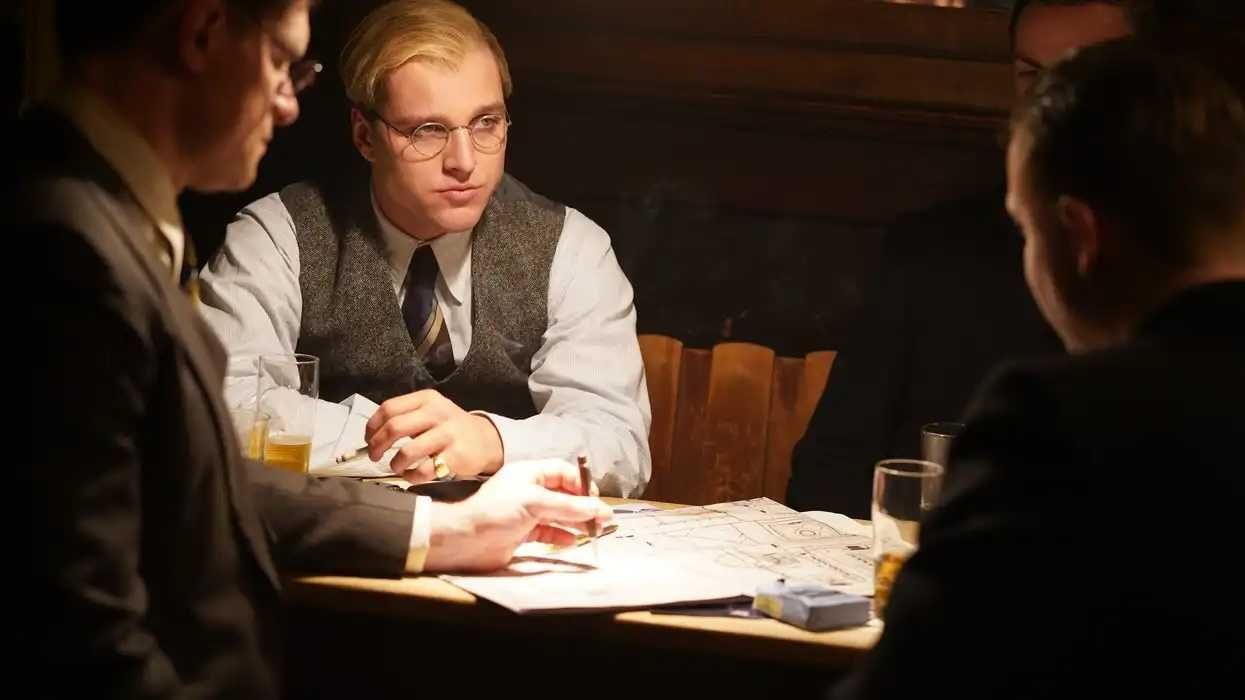 Image source: Angel Studios
‘Curdled into malice’
John Zmirak: Another change of mind you’ve provoked in me with this book is to drain away the sympathy I once had for Benedict Arnold, whom many historians have portrayed as the victim of an ungrateful Continental Congress, backstabbing colleagues such as Horatio Gates, and the quasi-Jacobin leaders of the Pennsylvania legislature. Instead, you portray him as a peevish Achilles skulking in his tent, being moved by spite and later greed to commit the ultimate betrayal — trying to surrender not just West Point to the British, but consigning the men under his command to miserable incarceration in the Brits’ deadly prison ships and even trying to arrange for his friend George Washington to be captured and likely hanged. Now, were you telling the story straight, or was this all just an allegory for Tucker Carlson turning on President Trump?
Eric Metaxas: I’m afraid the parallels to Tucker are all too apt. Yikes. But it’s horrifying to see how someone could do what Benedict Arnold did. That’s why I tell so much of his story, because it’s almost unimaginable until you hear all the details. And honestly, it’s kind of a cautionary tale for all of us. He was the bravest and most consequential figure in the whole war until Saratoga, and he was treated horribly. But then he let his gargantuan sense of self-regard lead him into something like a demonic and self-righteous bitterness that some historian said eventually “curdled into malice.” It’s awful. Hideous even. And yet we can’t look away.
John Zmirak: Who was the most admirable historical figure about whom you learned while writing this book? What misconceptions did the writing process banish from your thinking? What’s the most important lesson you hope young readers take away from “Revolution”?
Eric Metaxas: Er, that was three questions. Did you think you could so easily bamboozle me? And yet I shall endeavor to answer them, of course. The answer to the first question is John Adams. He should be a hundred times more famous than Thomas Jefferson. In a way the whole book ends up being his story somehow, although that was not my intention. But he is so compelling and so funny and acerbic and yet a man of the deepest integrity and Christian faith. I was amazed by him and by how central he was to bringing this nation into being, compared to what I had known.
One of the main misconceptions writing this book banished from my thinking was the idea that Adams was somehow peripheral, when he is infinitely more central to the story than Jefferson, as I mentioned, who really had almost no role in the Revolution itself and is mostly famous based on writing a single sentence — which was not his original idea, of course, and which was actually edited by Ben Franklin. Most of what Jefferson wrote in the Declaration had already been established over and over in the previous decade and had been said and written many times by many others. But when we declared independence, we needed someone to put it all down in a single document, and so Adams picked Jefferson to write the first draft. But we should not pretend that Jefferson was the author of the Declaration in the standard sense of the word “author,” as so many erroneously say. He brilliantly took these pre-established ideas and wove them into some beautiful sentences. But it’s not as if he came up with them. That would be like saying that Jerome wrote the Bible. Or like Matthew, Mark, Luke, and John wrote the parables of Jesus and the Lord’s Prayer. History needs at least to be honest.
As for the most important idea I think young people should take away, that’s impossible to say. There are many. But perhaps the central idea is that apart from Christian faith, there would never have come into existence the nation called the United States of America. That’s simply not debatable, but it’s very, very important, and very few people know it or want to know it. But we must know it, not just because it’s true, but because we cannot remain a free people without understanding where our freedom comes from.
‘Our glorious story’
John Zmirak: In your previous book on the founding, “If You Can Keep It,” you show how the American experiment of ordered liberty could only succeed — as all our founders agreed — if the population displayed the virtues that emerge from a lively Christian faith. You just mentioned that. Do you honestly think a sufficient percentage of Americans today have either such virtues or the faith that sustains them? If not, and in the absence of another Great Awakening, what non-democratic system of government would you recommend we adopt? Given your Greek/German heritage, perhaps you have a Byzantine or Hohenzollern alternative you could offer? Or is there some other option that occurs to you?
Eric Metaxas: Yes, if all else fails, I think a Hohenzollern-style monarchy is the way to go. But before that happens, I would earnestly advocate for us as Americans to reacquaint ourselves with our glorious story — which is precisely why I wrote this book — and try to do some justice to the great men who risked everything in living out that story. We absolutely and unequivocally owe them that, as I say in the epilogue. And I do hope that in reading my book, people will come away genuinely inspired. I think it’s almost inevitable in a way. When you see who these men were and what they did, you want to be a part of it yourself, and that’s precisely the idea. We are to continue the Revolution, as I say. That’s our job, and we must do it.
So I do believe there are enough Americans willing to do that, and it is my hope that those that aren’t yet willing will become more willing when they read the book and see what a great story they have the opportunity to become a part of.
“Revolution” will be available for purchase on June 2.
Products
-
 FAXHION 46pcs High-end Professional Tool Sets
$12.95
FAXHION 46pcs High-end Professional Tool Sets
$12.95
-
 250Th Anniversary Commemorative License Plate Frame
$12.95
250Th Anniversary Commemorative License Plate Frame
$12.95
-
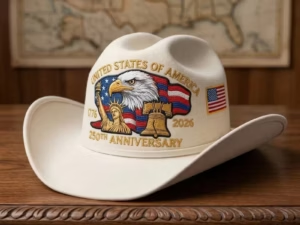 250th Anniversary American Flag & Eagle Embroidered Cowboy Hat
$12.95
250th Anniversary American Flag & Eagle Embroidered Cowboy Hat
$12.95
-
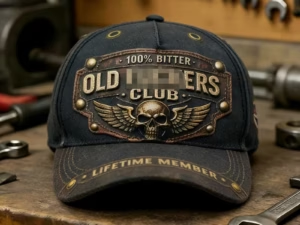 Vintage Bohemian Baseball Cap
$21.95
Vintage Bohemian Baseball Cap
$21.95
-
 Mens Watch Necklace Bracelet Ring 4
$12.95
Mens Watch Necklace Bracelet Ring 4
$12.95
-
 Mens Watch Necklace Bracelet Ring 3
$12.95
Mens Watch Necklace Bracelet Ring 3
$12.95
-
Mens Watch Necklace Bracelet Ring 2
$12.95
-
 Mens Watch Necklace Bracelet Ring
$12.95
Mens Watch Necklace Bracelet Ring
$12.95
-
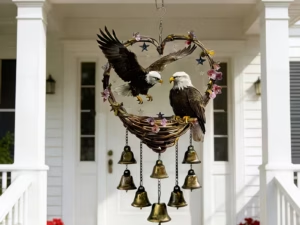 Large Eagle-patterned Wind Chime Set with Bells
$14.95
Large Eagle-patterned Wind Chime Set with Bells
$14.95
-
 Hexagonal Shaped Crystal Natural Stone Pendant
$4.95
Hexagonal Shaped Crystal Natural Stone Pendant
$4.95